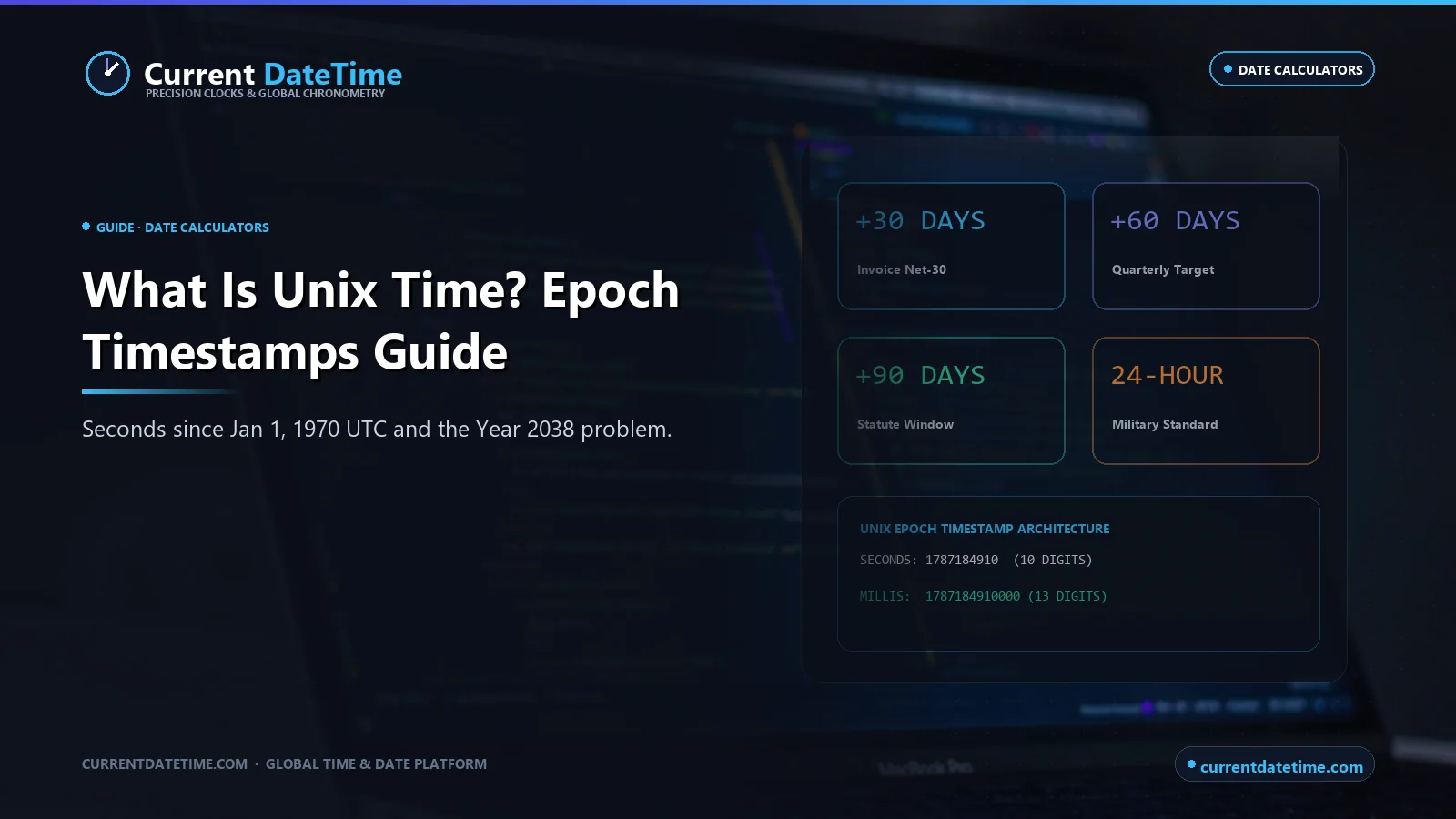
This Unix timestamp converter turns epoch time into a readable date and turns any date back into a timestamp. A Unix timestamp is the number of seconds that have passed since the first of January 1970 at midnight UTC, a moment known as the Unix epoch.
The converter detects whether your number is in seconds or milliseconds, shows the result in your local time, and also gives the UTC and ISO 8601 versions. The current timestamp at the top updates every second.
Seconds and Milliseconds
Unix timestamps usually come in two sizes. Plain Unix time counts whole seconds, which is a ten digit number for current dates. Many programming languages and browsers count milliseconds instead, which is a thirteen digit number. The converter reads thirteen digit values as milliseconds and shorter values as seconds.
UTC and Local Time
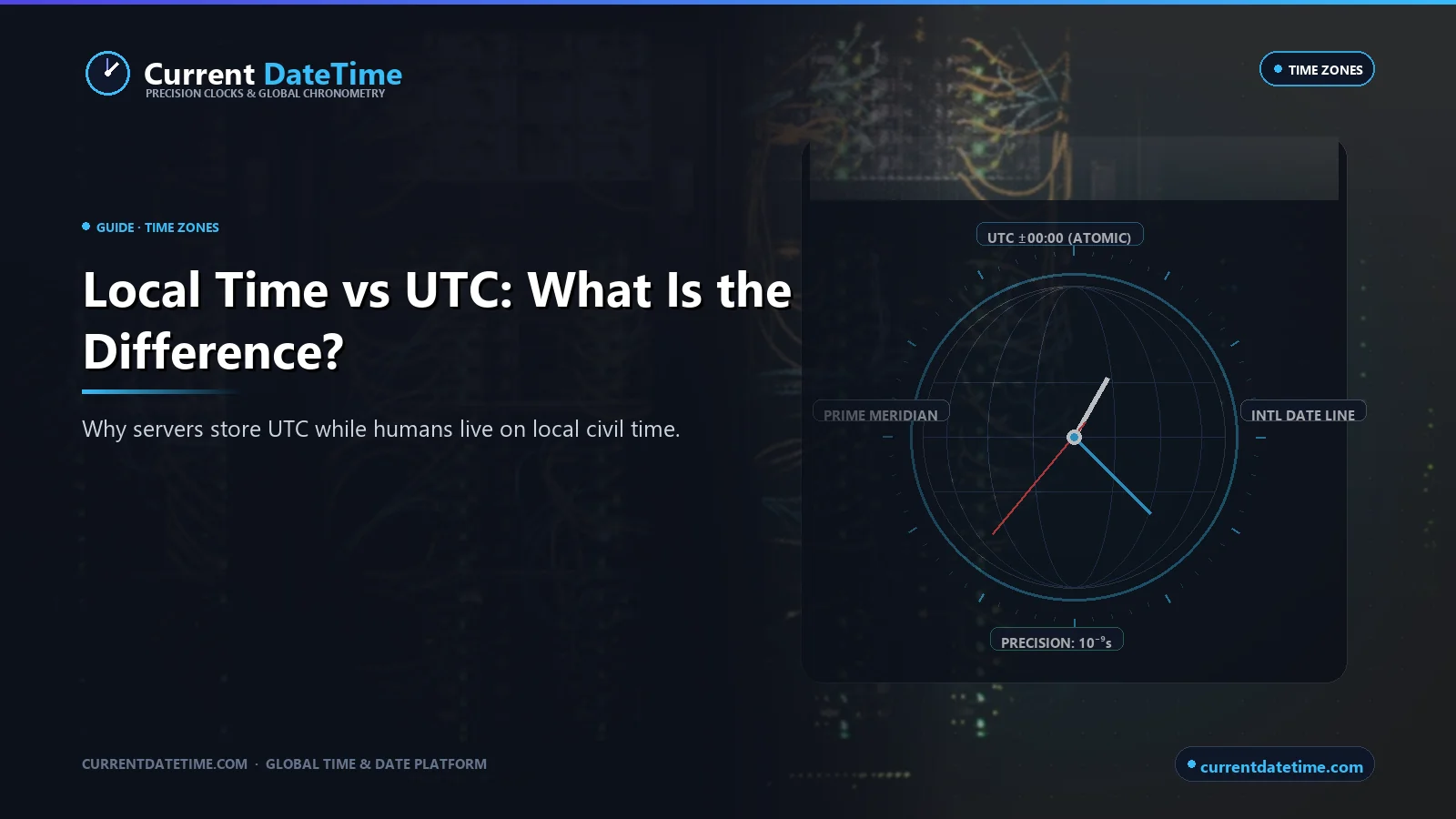
A timestamp itself has no time zone. It marks a single instant. When you read it as a date, you choose a zone. This tool shows the date in your device local time for convenience and also in UTC, which is the universal reference that timestamps are based on.
What People Use It For
- Reading timestamps from logs, databases, and APIs
- Generating a timestamp for a specific date in code
- Checking the current epoch time while developing
- Debugging time related issues across systems
Common Questions
Related Calculators & Date Tools
Recommended Clock & Time Tools
Recommended Precision Chronometry Guides
Explore our research-backed guides on international time systems and global clocks.